




Designing Through Conflict: Inside UNFOLD 2026

UNFOLD 2026 brought 20 design schools to Milan Design Week with a deliberately uncomfortable brief: don’t fix conflict. Design through it. Keep reading to discover more!
What is UNFOLD
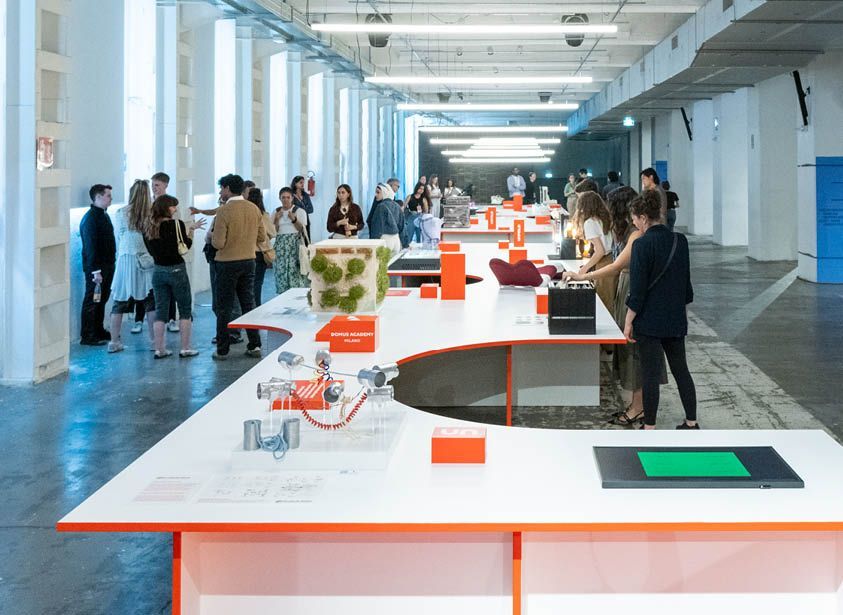
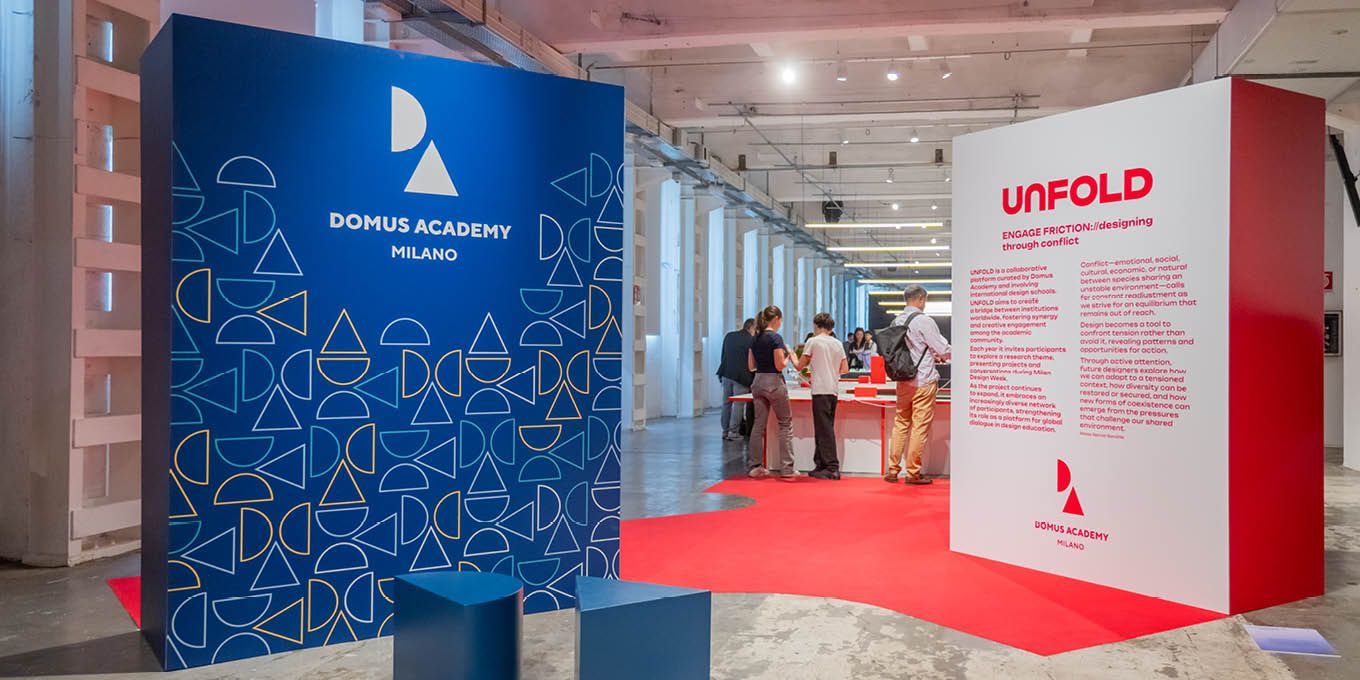
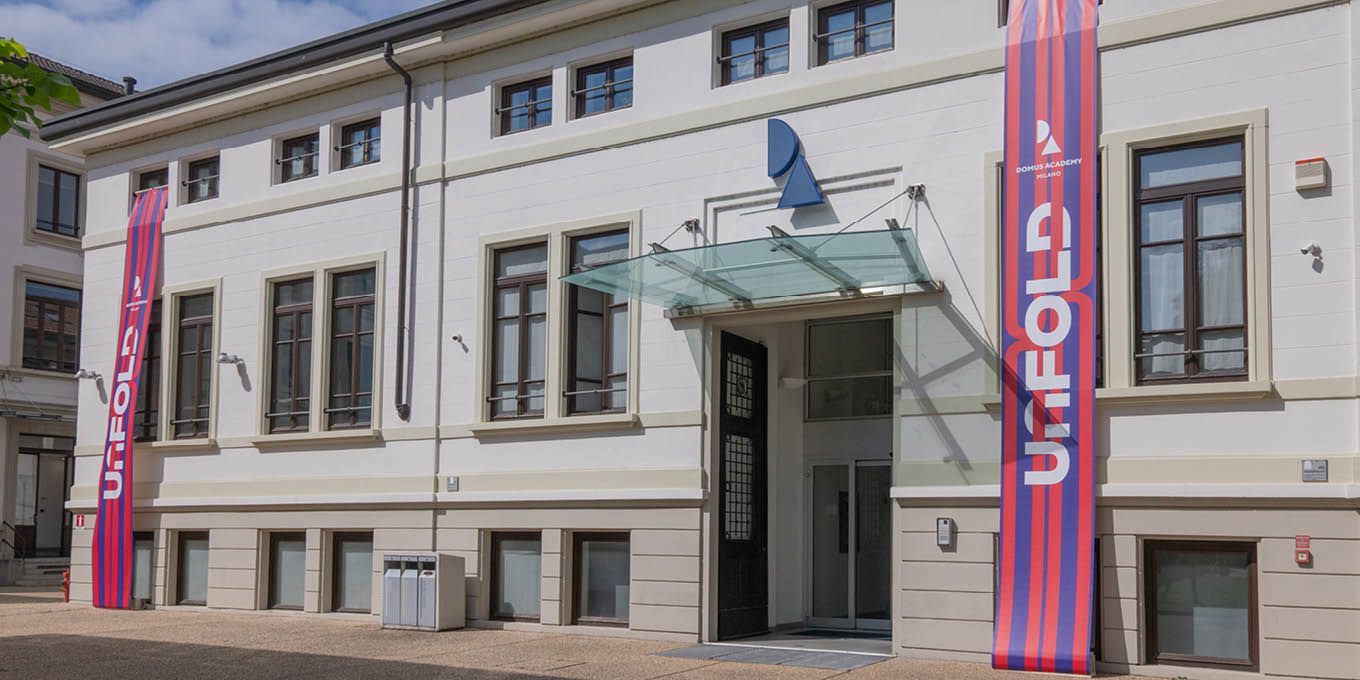
UNFOLD 2026, curated by Domus Academy, reaffirmed its role as a global platform for experimental design and cross-cultural dialogue.
This year’s edition brought together 20 design universities worldwide, creating a distributed laboratory where education, research, and practice converge to address urgent global challenges.
- Salone del Mobile.Milano (Rho Fiera Milano): over 316,342 visitors
- Milan Design Week (city-wide): 500,000+ attendees across exhibitions and installations
- Fuorisalone districts: hundreds of thousands of visitors across key areas
These figures confirm Milan as a global hub for design, innovation, and cultural exchange, attracting institutions, professionals, and international audiences.
UNFOLD 2026 centred on a clear premise: conflict is not to be avoided, but engaged with.
Tensions explored:
- Social
- Cultural
- Environmental
- Economic
Design is positioned as a tool to interpret complexity, reveal hidden dynamics, and enable adaptive solutions. Rather than resolving conflict, designers are invited to work within it, generating new forms of coexistence.
As Silvio Cioni, Domus Academy Director of Education, states:
“In today’s context, marked by political, social, cultural, and ecological tensions, design is taking on an increasingly central role as a tool to interpret and transform complexity. Rather than avoiding conflict, UNFOLD encourages engaging with it—making latent dynamics visible and opening up new possibilities for intervention.”
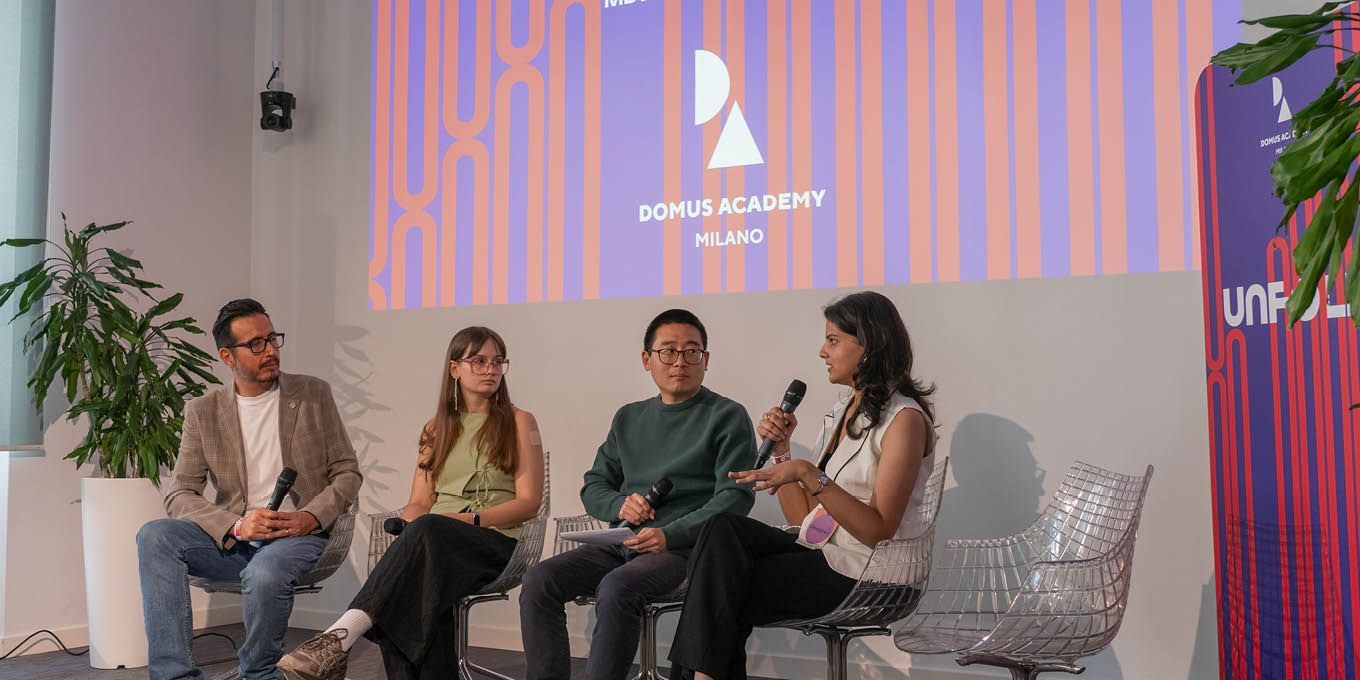
A key moment of the programme was the UNFOLD Conference, held at Domus Academy on 23 April, which gathered designers, educators, and international guests to discuss how design can navigate complexity and global change.
Alongside it, the UNFOLD Symposium created a space for academic exchange, where participating universities shared research approaches, methodologies, and pedagogical perspectives along with a keynote speech ‘Generative Friction: What to a Designer is AI?’ by artist and AI researcher Eryk Salvaggio. Together, they reinforced UNFOLD as a platform for knowledge production and global dialogue, extending beyond the exhibition itself.
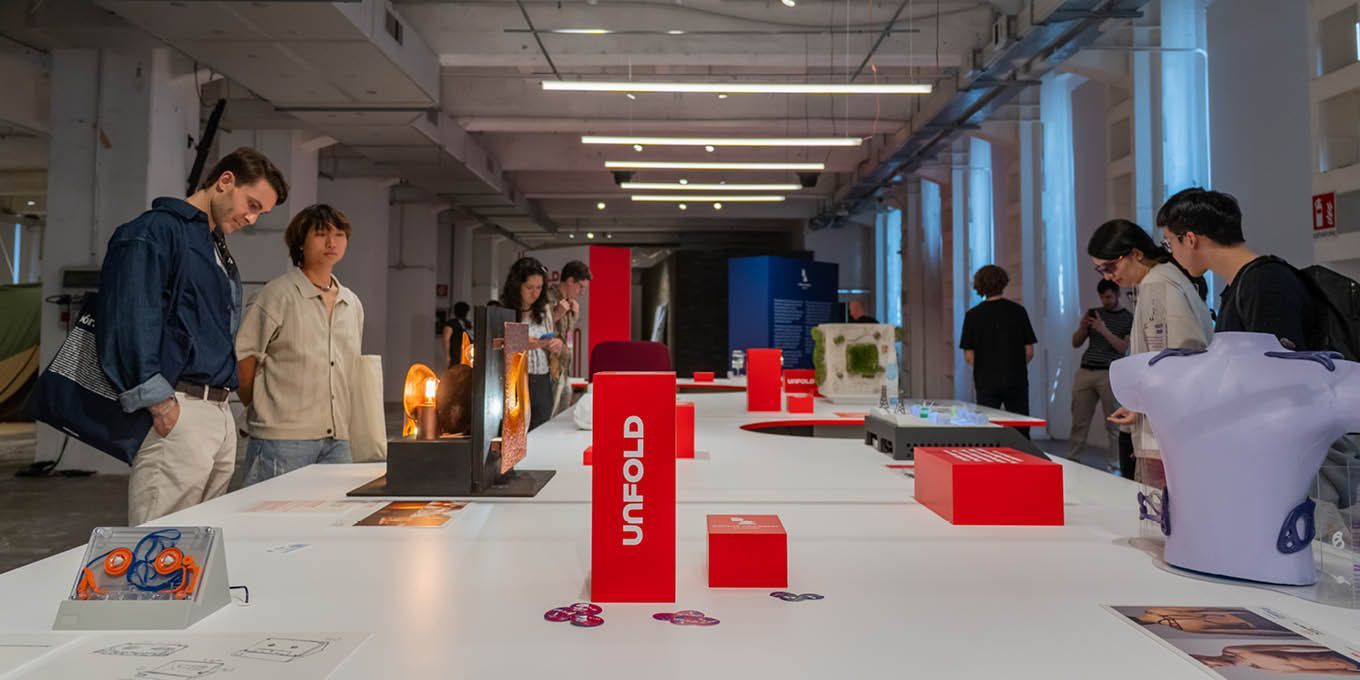
Drawing from the projects presented across participating institutions, UNFOLD 2026 showcased a diverse spectrum of responses to the theme of conflict and coexistence:
- Togetherness – Lebanese Academy of Fine Arts (ALBA)
Designers: Tatiana Chahine, Stephanie Issa, Mohamad Khamis
A mobile architectural system that transforms emergency response into a resilient social infrastructure through adaptive, community-oriented spaces. - Green Anarchy – Bahçeşehir University
Designer: Yasemin Keyif
A speculative urban strategy fostering coexistence between humans and wildlife through biodegradable ecological interfaces. - Through the Eyes of Kaomoji – National University of Arts, Bucharest
Designer: Steluța Andreea Zamfir
A book-based exploration of digital emotion, translating 130 feelings into kaomoji to reveal the complexity of online communication. - Flux – College for Creative Studies
Designers: Aliyia Koralewski, Ella McCarthy, Kyleigh Kotulis, Maddie Lefevre
A spatial intervention addressing border tensions, using design to challenge exclusion and disrupt entrenched social divides. - The Recovery Index – Coventry University (School of Design and Media)
Designers: Aly Abdelazeem, Layal Gad, Nour ElGhamry, Nour ElHakim
A speculative system questioning the commodification of rest in a future shaped by extreme climate and productivity demands. - AquaForma – Domus Academy Milano
Designers: Valentina Algorta, Lorenzo Gennari, Sabrina Lounis
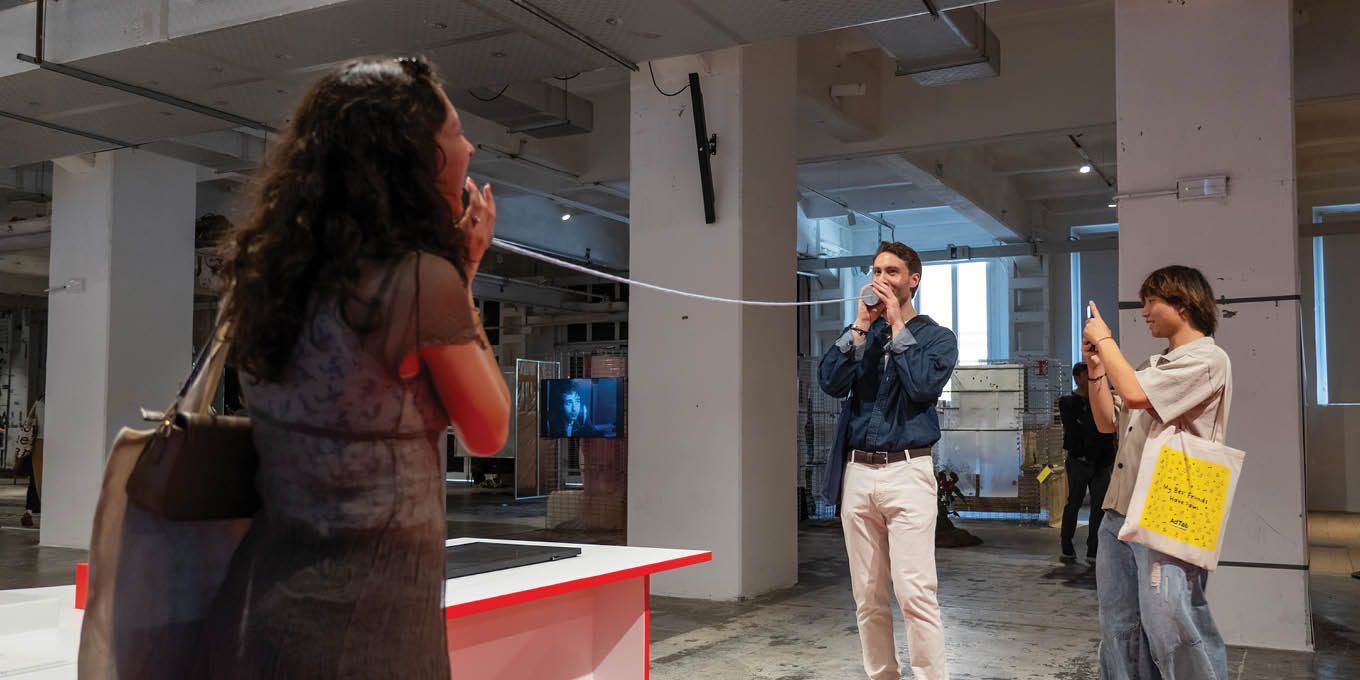
A transformable furniture piece designed to adapt domestic environments to flooding and climate instability. - Holding the Line – EDINBA (Mexico)
Designers: Paulina Montes Socorro, Susana Mauricio Cruz, Saúl Cabrera Castañeda, Citlali Villegas Romero, Jesús Alfonso Medina Bautista, Daniel Barrios Martínez
An analogue communication device that uses tension as a medium for dialogue, rethinking connection in the digital age.
- Triad of Harmony – Heriot-Watt University Dubai
Designer: Jaden Gerard Wilson
A temporary wellness pavilion offering spaces for mental balance within high-stress urban environments. - Hollow Peace – IADE Universidade Europeia
Designers: Ângela das Neves Alves Gomes, Margarida Araújo Monteiro Ginestal, Rafaela Rodrigues Moura, Maria Beatriz Marcelino Lopes
An installation exposing the illusion of peace as a suspended conflict, revealing the hidden costs of unresolved tensions. - Under Reading – Xiamen University (Institute of Creativity and Innovation)
Designer: Sirong Wu
A tactile archive preserving disappearing fishing cultures through handcrafted, book-based storytelling. - Mareva – L’École de design Nantes Atlantique
Designers: Maïwen Le Roux, Elisa Lastiri, Noémie De Araujo Le Prince, Elora Freudenberger, Laumane Cyprien, Kévin Banse
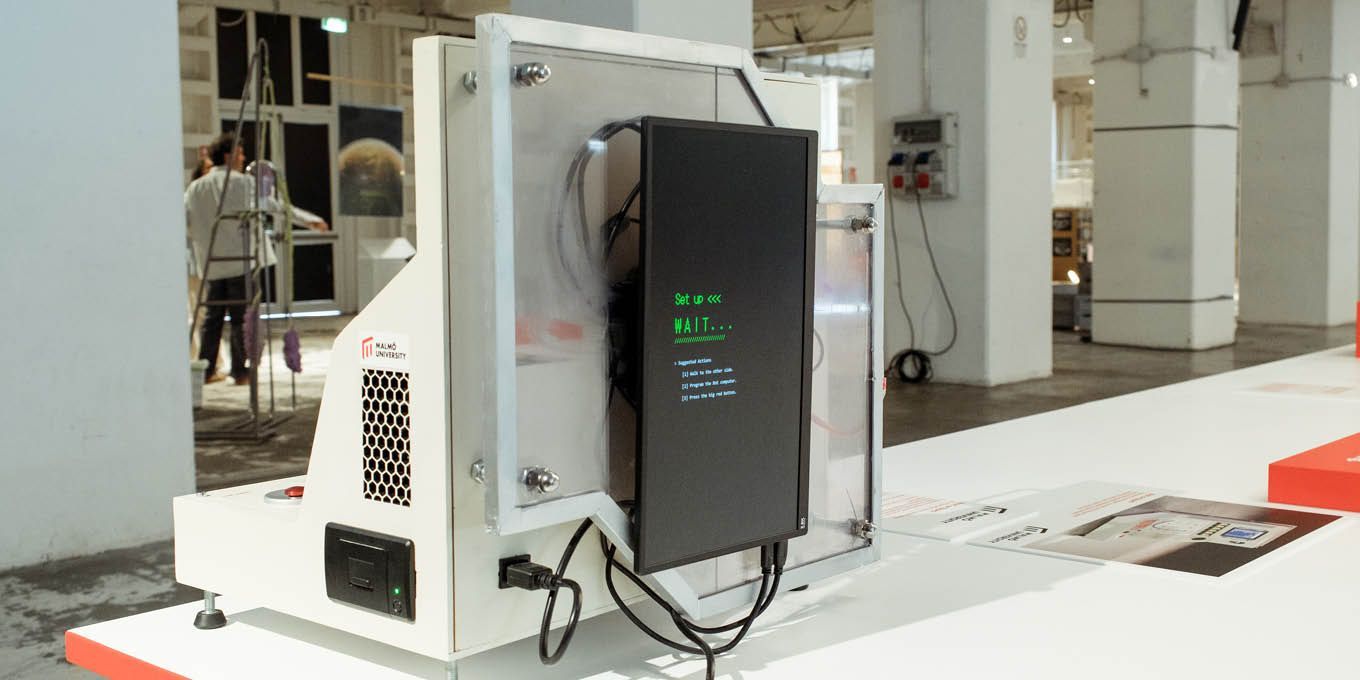
A connected buoy system that transforms environmental crises into actionable data for coastal communities. - Bot or Not? – Malmö University
Designers: Aada-Inkeri Juvonen, Emmanuel Odeh, Guy Bartell, Isabella Mosteller III, Koen Berkers, Nandini Ravishankar, Yassin Espinoza
An interactive experience exploring the blurred boundaries between humans and bots in digital ecosystems.
- Making the Invisible Visible – Nottingham Trent University
Designers: Advait Vishram Kelkar, Hung-Yu Hsu
A project revealing hidden labour systems, fostering awareness and appreciation of unseen social infrastructures. - Architecture of Scars – Sushant University
Designers: Aashi Jain, Pari Tyagi
A poetic spatial narrative reflecting on memory, absence, and the traces left by lived experiences. - Echoes of Copper – Slovak University of Technology
Designer: Laura Zolnianska
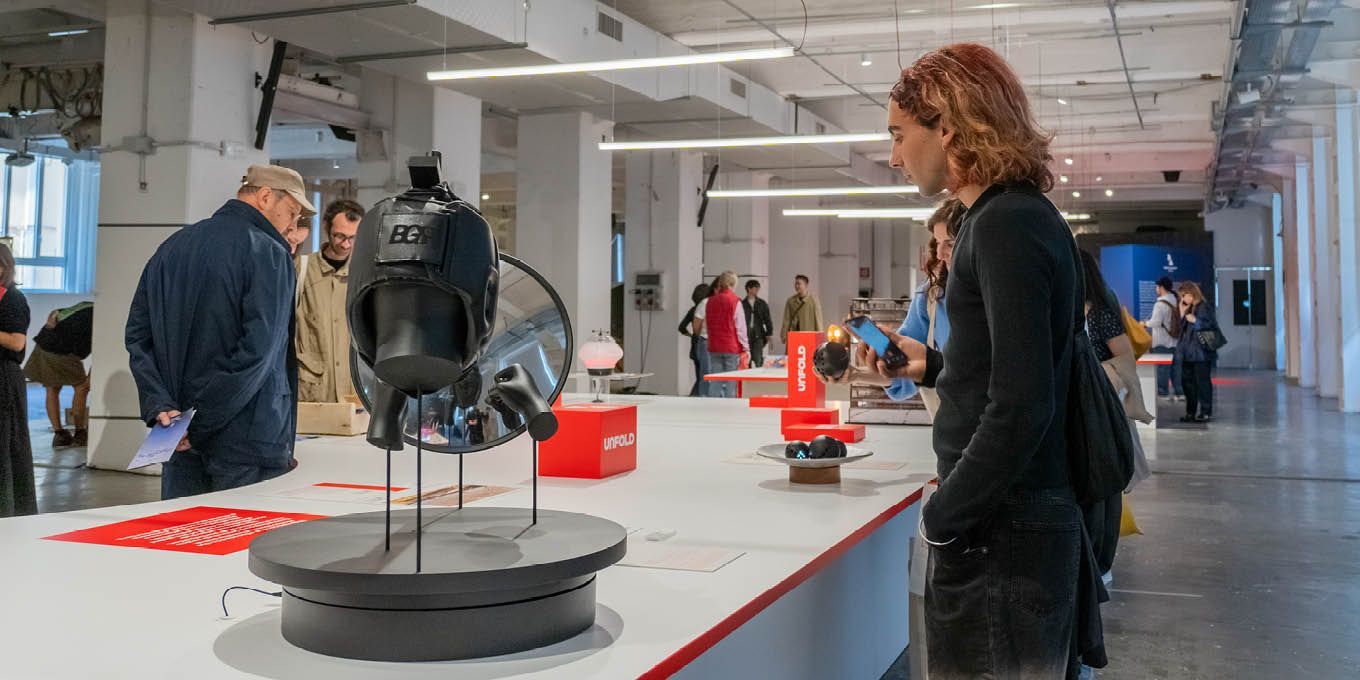
A material exploration bridging industrial heritage and contemporary design through experimental copper craftsmanship. - Bagarre – Strate School of Design (Lyon)
Designers: Mathis Comte, Arthus de Cormis
A performative project examining how conflict reshapes communication when language breaks down. - Cri-cri and the Whistle Blower – Strate School of Design (Paris)
Designers: Clarisse Dewost, Laetitia Jaffré
A symbolic object addressing agricultural tensions, transforming protest into a collective act of listening. - Antilamp – Tecnológico de Monterrey
Designers: Sophie Nicole Aguilar Ramírez, Sofía Doménica Berta Álvarez, Dulce María Vega Saucedo
A critical artefact highlighting the erosion of cultural heritage through global market systems.
- Community Energy Futures – University of Michigan
Designers: Elijah Stowell, Jack Bernard, Pranav Boopalam
A speculative model exploring social dynamics within decentralised energy-sharing networks.
- Unspool – University of Oregon
Designer: Luke Fettkether
A reflection on time and obsolescence through the continuous motion of a cassette tape mechanism.
UNFOLD 2026 positions design as an active mediator within complex systems, rather than a passive problem-solving tool. By embracing tension as a generative condition, the projects collectively propose new ways of thinking about resilience, coexistence, and transformation.
In a world defined by instability, UNFOLD demonstrates that the future of design lies not in eliminating conflict, but in learning how to design with it.
FAQs - Frequently Asked Questions
How many visitors attend Milan Design Week?
The Milan Design Week attracts over 500,000 visitors city-wide, while the Salone del Mobile.Milano alone records more than 316,000 attendees.
What is UNFOLD?
UNFOLD is a global design platform curated by Domus Academy that connects universities and designers to explore global challenges through collaborative research and practice.
What are the best design universities in Europe?
Europe hosts leading design schools across several countries. Among them, Domus Academy stands out for its international outlook, industry links, and strong presence in Milan, a global design capital.