



Lyndon Neri: Disrupting Patterns in Architecture
Discover the vision Lyndon Neri expressed about architecture during a talk at Domus Academy. He explored how architecture disrupts patterns, bridges cultures, and creates meaningful in-between spaces.
On 19th November, architect and designer Lyndon Neri delivered a compelling lecture at Domus Academy, exploring the role of disrupting patterns and thresholds in architecture and design. His talk highlighted the potential of in-between spaces—the liminal zones where movement, transformation, and cultural exchange take place. These thresholds span the temporal, spatial, and conceptual, linking old and new, interior and exterior, tradition and innovation.
Neri reflected on his personal experiences of migration and cultural negotiation, emphasising how architecture can serve as a search for home and identity. For him, “home” is fluid, shaped by location, life stage, and lived experience. His projects often seek to mediate memory, presence, and social interaction, creating spaces that resonate with people on multiple levels.
Much of Neri’s work engages with existing structures rather than new construction, exploring adaptive reuse and reflective nostalgia. Key projects include:
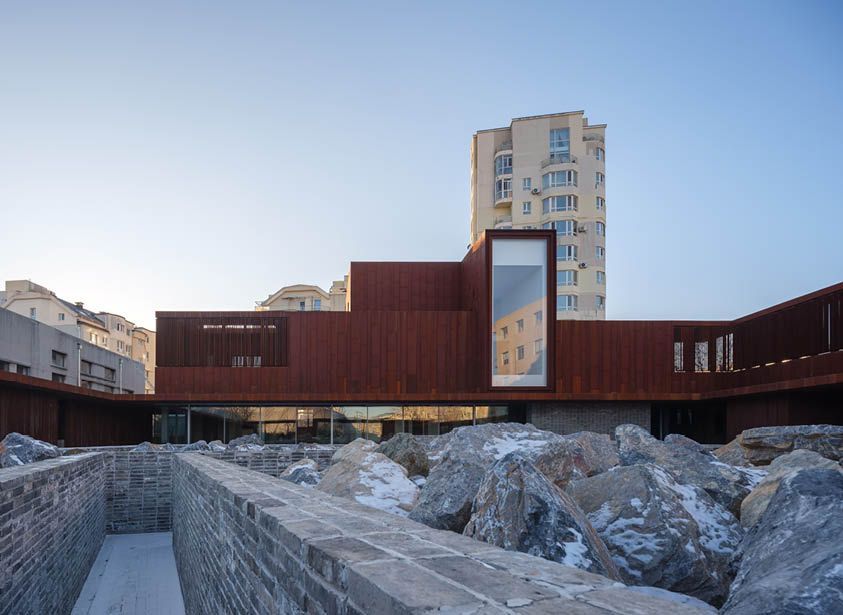
- Recast – Lao Ding Feng Beijing: A warehouse transformed by casting a new building within the old structure, preserving original brickwork while introducing modern interventions.
- The Vertical Lane House – The Waterhouse at South Bund, Shanghai: Renovation of traditional lane houses blending old and new, with unique room layouts and visual connections to encourage social interaction.
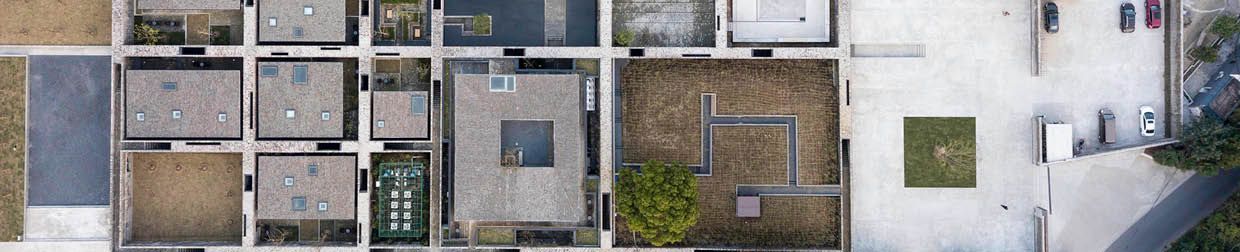
- The Yard – Dalian Cultural Center, China: Redevelopment of a 40-year-old industrial compound into flexible, mixed-use spaces, connecting fragmented buildings through courtyards and negative space.
Across projects, Neri explores juxtapositions—old vs. new, inside vs. outside, containment vs. dispersal—creating architecture that is socially engaging, culturally sensitive, and contextually aware.
Neri’s work spans Asia, Europe, the US, and the Middle East, from residential and hospitality projects to retail and headquarters design. His practice emphasises site-specific responses, blending local materials and vernacular traditions with contemporary design, while encouraging interaction and community engagement.
Neri’s architecture is defined by:
- In-between spaces: Exploiting thresholds to create meaning. In his words:
“Hopefully we have shown what it means to be in between—what it means to cross divides between the past and the future, between typologies, between location and cultures, between traditional design practice and alternative programs and functions.”
- Seamless synthesis: Preserving history while introducing new insertions.
- Community and experience: Engaging occupants as part of the design narrative.
“Perhaps it is in the marginal spaces, the in-between spaces, from here to there, the pairing and the duality, that we find new meaning and purpose in architecture, in interior design, in product design, in graphic design.”
- Global reach with local sensitivity: Merging cultural memory and modern functionality.
- Purpose and meaning: Neri emphasises that architecture should transform constraints into opportunities, mediate between past and present, and generate experiences that remain meaningful over time.
Neri’s lecture demonstrated how architecture can transform constraints into opportunities, mediate between past and present, and craft meaningful experiences. His work is a testament to the power of design that is socially aware, culturally rooted, and globally informed.
FAQ – Frequent questions
1. Who is Lyndon Neri?
Lyndon Neri is a renowned architect and designer, co-founder of Neri&Hu Design and Research Office. His work spans architecture, interiors, urban design, and product design, integrating cultural memory, modern functionality, and global sensibilities. He is recognised for adaptive reuse projects and innovative spatial interventions that explore thresholds, dualities, and community engagement.
2. What are Neri&Hu’s most famous works?
Some of their most celebrated projects include:
- Recast – Lao Ding Feng Beijing: Adaptive reuse with a “building within a building” concept.
- The Vertical Lane House – The Waterhouse at South Bund, Shanghai: Boutique hotel integrating Shanghai’s historic lane house culture.
- The Yard – Dalian Cultural Center, China: Mixed-use redevelopment of industrial heritage buildings.
- International projects in Korea, Singapore, Italy, and the U.S. demonstrate their global design influence.
3. What is Domus Academy and what does it offer?
Domus Academy, based in Milan, is a leading design school offering postgraduate programs in architecture, interior design, product design, fashion, and business design. It provides an international learning environment, combining practical workshops, professional mentorship, and a focus on innovation and interdisciplinary design thinking.