



How Is a Fashion Show Created?
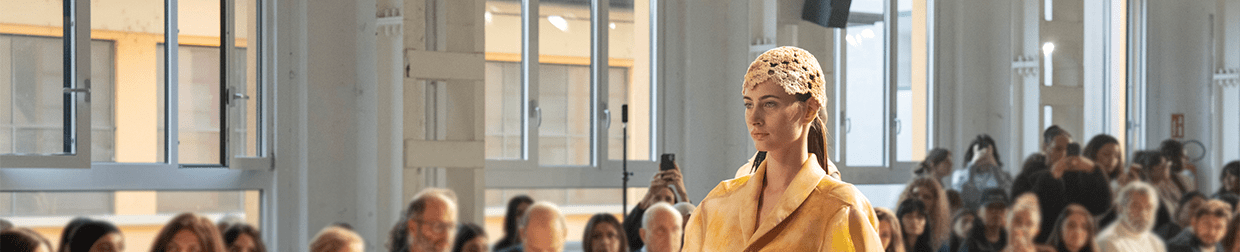
A fashion show is one of the most exciting moments for a designer, especially for the young designers of Domus Academy Milan who experience it for the very first time. Read below to learn how these events come to life.
“A fashion show is not just the presentation of a collection: it is a visual language that gives shape to an idea, translates an emotion, and tells the identity of a designer. It is the point where creativity, technique, and vision become an experience. A fashion show also represents a designer’s past and, immediately afterward, transforms into a new version of themselves.”
Ali Karami, Fashion Laboratory Specialist at Domus Academy.
The initial brainstorming and inspiration research stages
The creation of a collection always begins with a question: what story do I want to tell? From there, a journey of research, observation, and experimentation begins.
Brainstorming and initial concept
The designer defines a theme, a message, or a feeling they want to translate into fashion. This often comes from a personal emotion, an intuition, or a creative urgency.
Visual and cultural research
Images, materials, historical and artistic references are collected to build the aesthetic universe of the collection.
Main sources of inspiration include:
- art and architecture
- cinema and photography
- contemporary subcultures
- traditional craftsmanship
- social transformations
- nature, materials, and fabrics themselves
- personal experiences
Silhouettes and materials
The concept takes shape through sketches, moodboards, draping on mannequins, fabric selection, and technical experimentation.
Prototyping and refinement
Ideas turn into real garments. They are tested, modified, and rebuilt: it is an iterative process that requires time and precision.
In short: a collection is a balance between intuition, research, and craftsmanship.
Behind the Scenes
- Fashion designers: create the collection
- Pattern makers: transform drawings into actual garments
- Tailors and laboratory technicians: produce the prototypes
- Make-up artists and hairstylists: create the beauty look consistent with the collection
- Art directors: define the aesthetic, rhythm, and atmosphere of the show
- Production coordinators: manage logistics and ensure everything runs according to plan (timing, casting, materials)
- Technical equipment staff: handle stage, runway, audio, and video setup
- Backstage assistants: help with preparation and organization, manage quick changes, outfit order, and model support
- Fashion buyers
- Photographers and camera operators
- Journalists, critics, influencers, bloggers
- Show directors: coordinate the entire performance and ensure everything runs smoothly
- Lighting technicians: manage lighting to create the desired atmosphere
- Sound technicians: ensure high audio quality during the show
- Security staff: guarantee the safety of all participants and spectators
- Audience
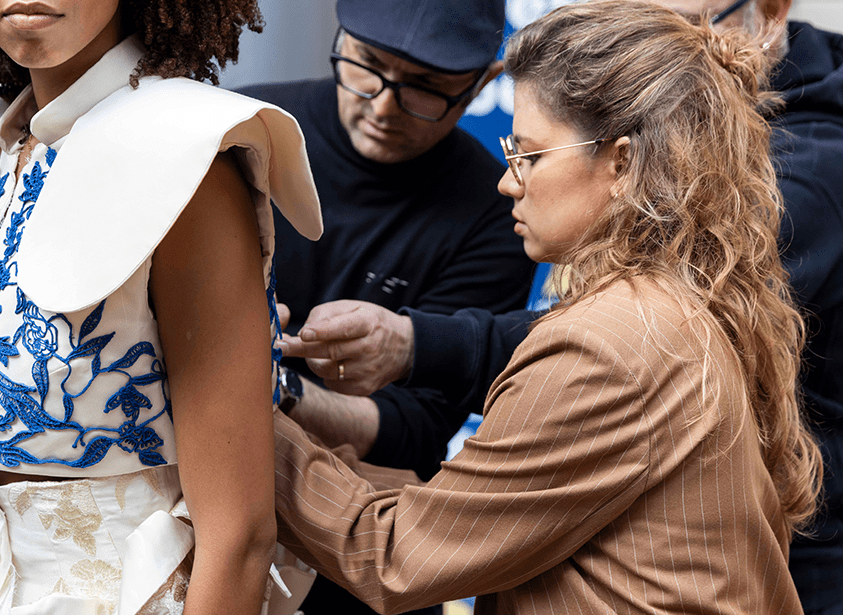
The fitting process and its stages
- model selection
- look assignment
- garment fitting on each body
- tailoring adjustments
- definition of the runway order
- testing of quick changes
Because it makes it possible to understand:
- how the garment moves
- whether the fit is correct
- whether the look communicates the collection’s message
- whether proportions, hems, or styling need to be modified
- very tight schedules: synchronized work between designers and tailors
- differences in models’ measurements: fast alterations
- difficult quick changes: simplification of looks or backstage support
The fitting transforms the collection from an idea into a performance.
The frenetic activities and the backstage atmosphere
Backstage is a place of pure energy: controlled chaos, fast rhythms, adrenaline, positive tension.
- final rehearsals with models, lights, and music
- definition of the beauty look
- preparation of quick changes
- delivery of the last garments straight from the workshop
- final briefing by the show director
- nervous detail checks: a button, an accessory, a small imperfection
Even the most experienced professionals feel:
- pressure
- a strong sense of responsibility
- excitement
- vulnerability
- and then… relief and pride when the first model steps onto the runway
A fashion show is an emotional journey, not just a professional one.
Which Organization Is Responsible for Organizing Milan Fashion Week?
In Milan, the organization of fashion shows is managed by the Camera Nazionale della Moda Italiana (CNMI). Founded in 1958, CNMI is a non-profit association representing the most important Italian fashion brands. Its mission is to promote and coordinate the development of Italian fashion both nationally and internationally.
CNMI organizes the prestigious Milan Fashion Week, for both men’s and women’s collections, held twice a year and attracting designers, buyers, journalists, and influencers from all over the world. In addition to coordinating fashion shows, CNMI is also involved in education, sustainability, and innovation, helping keep Milan one of the world’s fashion capitals
Piattaforma Sistema Formativo Moda, a Third Sector organization, is the hub that brings together the best Italian institutions and academies offering post-diploma education in the fashion sector.
In Milan, student fashion shows are organized by Fashion Graduate Italia. This annual event, held every October, offers a unique platform for emerging talents from the leading Italian fashion schools. Fashion Graduate Italia not only celebrates students’ creativity and innovation, but also provides an opportunity for these future professionals to present their collections to industry experts, journalists, and potential employers. This initiative is essential for promoting generational renewal in the fashion world and keeping Milan at the center of the international fashion scene.
FAQ – Frequent questions
1. What makes a fashion show such an important moment for a designer?
A fashion show represents the moment when a designer’s ideas, creativity, and technical skills come together in a live experience. It is the public expression of their vision and identity, making it a powerful and defining milestone in their career.
2. Why is the first fashion show especially important for young designers at Domus Academy Milan?
For young designers, their first fashion show is a unique and emotional experience. It marks their first real opportunity to present their work to an audience and industry professionals, transforming years of study and experimentation into a real, professional statement.
3. How does a fashion show go beyond simply presenting clothes?
According to Ali Karami, a fashion show is a visual language that translates emotions and ideas into a sensory experience. It tells a story, communicates identity, and turns a collection into something immersive and expressive.
4. Why a fashion show reflects both the past and future of a designer?
A fashion show represents everything the designer has created up to that moment, while at the same time launching a new phase of their creative journey. It is both a conclusion and a new beginning.