





Material Innovation and Sustainability in Fashion: Kering at Domus Academy
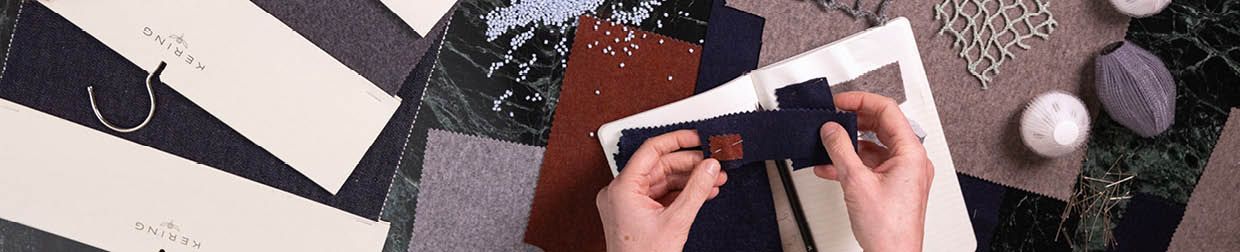
An exploration of how Kering’s Material Innovation Lab is redefining fashion through sustainable materials, strategic design and collaboration, shared during a Domus Academy’s Disrupting Patterns Talk.
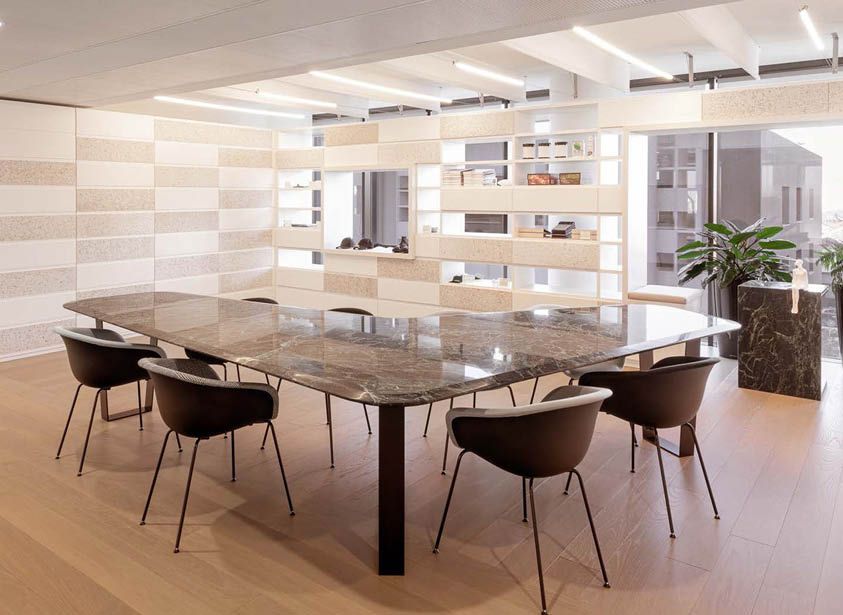
During the Disrupting Patterns Talk at Domus Academy, students engaged in a forward-looking conversation on sustainability, design and innovation with Christian Tubito, Material Innovation Lab Director at Kering.
In dialogue with Elisa Chiodo, Head of School of Business at Domus Academy, the discussion explored how material innovation is transforming the luxury fashion system, and what this means for future designers.
The Material Innovation Lab (MIL) plays a strategic role within Kering’s sustainability framework. Based in Milan, it operates as a central hub connecting brands, suppliers and manufacturers.
Rather than functioning as a traditional laboratory, the MIL coordinates experimentation across a network of specialised partners. Its focus is on textiles and related technologies, supporting creative and R&D teams in selecting and developing more sustainable materials.
As Tubito explained during the talk, the Lab’s role is highly practical and grounded in production realities: “we don’t work mainly with the idea, but we work with material”
This approach allows innovation to move beyond concepts and into tangible applications within collections.
Tubito’s background in industrial and strategic design reflects a broader shift in the role of designers. Today, design extends beyond product creation into systems thinking and decision-making.
His career path combines consultancy, research and collaboration with material scientists and companies across industries. This has led to a cross-functional mindset that connects creativity, business and technology.
At the core of this approach is the ability to navigate complexity. Designers are increasingly required to act as intermediaries between different domains, aligning diverse perspectives to achieve practical outcomes.
One of the key insights from the conversation is the inherent difficulty of introducing new materials in the luxury fashion industry.
Fashion operates on fast and rigid timelines. Collections are developed in cycles of just a few months, leaving limited room for long-term experimentation. At the same time, new materials require extensive validation before they can be used at scale.
Traditional fibres such as cotton, wool or cashmere benefit from decades or even centuries of accumulated knowledge. By contrast, innovative materials often lack a proven track record, making brands more cautious in adopting them.
Industrial feasibility is another major barrier. A material that performs well in a controlled environment must also work within complex supply chains and manufacturing systems.
The Material Innovation Lab addresses these challenges through continuous testing and collaboration with suppliers. Innovation is developed iteratively, with multiple trials to refine both technical performance and aesthetic qualities.
Projects can take several years before reaching the market. The process involves validating materials, adapting them to industrial production, and aligning them with brand requirements.
This long-term perspective is essential in a context where creative direction, seasonal trends and technical constraints must all converge.
Sustainability is a central driver of innovation at Kering, particularly through the exploration of regenerative materials.
These materials are sourced using agricultural practices that aim to restore and preserve ecosystems. They contribute to soil health, biodiversity and carbon capture, offering a more holistic approach to sustainability.
However, implementing regenerative materials introduces new levels of complexity. Differences in fibre quality, geographical sourcing and production capabilities require careful coordination across the entire supply chain.
This includes aligning R&D teams, production units and suppliers, as well as managing expectations within brands that operate under tight deadlines.
Material innovation cannot be separated from brand identity. Each fashion house within Kering has its own aesthetic language, heritage and creative direction.
To support this, the Material Innovation Lab develops internal material archives that map key fabrics, colours and textures associated with each brand. These tools help ensure that innovation remains consistent with the brand’s DNA.
At the same time, shifts in creative leadership can redefine priorities, requiring continuous adaptation. Understanding these changes early is essential to avoid misalignment between material development and creative vision.
A recurring theme in the talk is the evolving role of designers as translators between disciplines.
Designers are uniquely positioned to interpret creative input and translate it into technical solutions. They can bridge the gap between abstract concepts and production realities, ensuring that innovation is both meaningful and feasible.
This role is particularly important in collaborative environments, where communication between teams is often fragmented or unclear.
Tubito emphasised that working in innovation requires a shift in mindset. Rather than focusing solely on problem-solving, designers should learn to define and structure problems effectively.
In his words: “I don’t like the the problem solver… I mainly a problem setter”
This perspective highlights the importance of framing challenges correctly in order to identify the most relevant solutions.
Design thinking, in this sense, becomes a strategic tool for managing complexity, guiding decision-making and enabling collaboration across functions.
For students at Domus Academy, the conversation offered valuable guidance on navigating future careers in design and innovation.
A multidisciplinary approach is a critical asset. The ability to understand different languages — from business to science to creativity — allows designers to operate effectively in complex environments.
Equally important is the capacity to manage systems rather than individual elements. Innovation rarely happens in isolation; it emerges from the interaction between multiple actors, processes and constraints.
Finally, students were encouraged to maintain a proactive mindset. Even within defined roles, there is always space to propose new perspectives, create processes and drive change.
The discussion highlighted how sustainability and innovation are reshaping the fashion industry at a systemic level.
Material innovation is no longer just a technical challenge. It is a strategic, cultural and organisational process that requires collaboration, time and vision.
For emerging designers, this represents both a challenge and an opportunity: to move beyond traditional boundaries and actively contribute to building a more sustainable and innovativative.
FAQ – Frequent questions
1. What is a Material Innovation Lab in fashion?
A Material Innovation Lab is a hub that develops and tests new textiles and technologies for fashion brands. It connects designers, suppliers and manufacturers to bring sustainable materials into real collections.
2. What skills are needed for a career in material innovation?
Key skills include design thinking, cross-disciplinary collaboration and an understanding of materials and supply chains. The ability to manage complexity and translate between creative and technical teams is essential.
3. What fashion programmes are offered at Domus Academy?
Domus Academy offers postgraduate programmes in fashion design, fashion management and luxury brand management. These courses combine creativity, business strategy and sustainability to prepare students for careers in the global fashion industry.