




Phygital Fashion: Redefining What’s Possible

In a world where fashion increasingly exists across both physical and digital dimensions, accessories can now live between two worlds simultaneously.
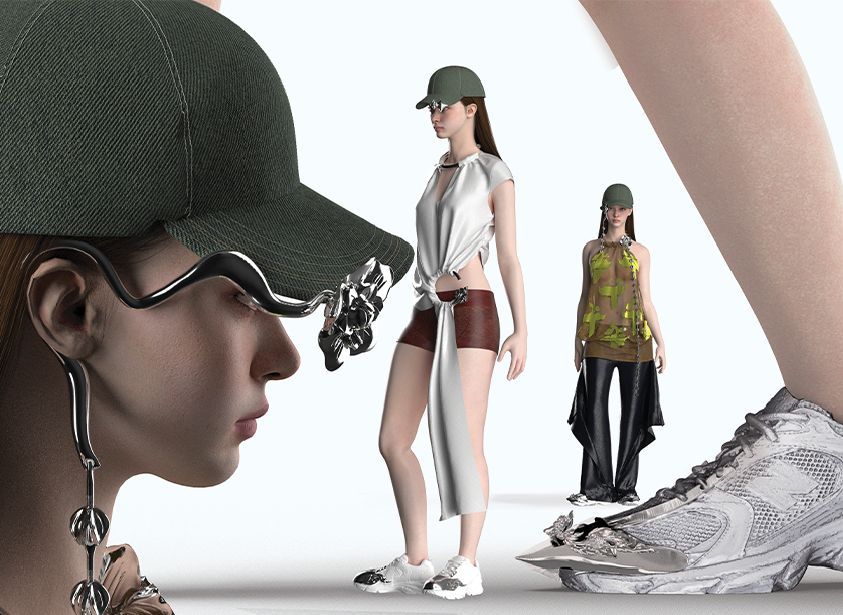
A groundbreaking thesis from Domus Academy’s 2-Year Master of Arts in Fashion: Design, Art & Technology is redefining what it means to create sustainable fashion pieces that exist meaningfully in both realms. The project, recognised by Domus Academy and Fashion United for its innovative approach, introduces a practical model for emerging designers navigating the complex intersection of technology, creativity, and environmental responsibility.
The Project: Aave Atelier
Aave Atelier, the conceptual brand developed as the thesis case study, represents a new paradigm in fashion entrepreneurship. Rather than choosing between physical products or digital assets, the brand creates accessories that exist meaningfully in both realms. Each piece functions as a tangible object while simultaneously living as a digital item that can connect with other creations, add new dimensions to existing pieces, or exist independently in virtual spaces. This phygital collaboration challenges traditional notions of ownership and value in fashion, encouraging consumers to think differently about what it means to possess and wear accessories.
The fashion industry faces a crucial dilemma: technology offers unprecedented opportunities for innovation and sustainability, yet it also accelerates the pace of fast fashion. The thesis proposes that small brands hold a unique advantage in balancing these competing forces. Through circular business models, modular design, and conscious material choices, emerging designers can harness technology’s benefits while maintaining authentic and sustainable practices.
The Aave Atelier model integrates multiple technologies with specific purposes. 3D printing becomes a final production method using recycled filaments for localised, on-demand manufacturing. Augmented reality transforms customer engagement through virtual try-ons on platforms like TikTok, creating community-driven experiences. AI serves as a communication bridge to visualise concepts and reduce waste, demonstrating how small brands can access tools once reserved for industry giants.
At the heart of the project lies a genuinely circular approach based on assembly and modular design. Customers can combine pieces from different collections to create personalised combinations and return unwanted accessories to be recycled into new filament. The brand also offers printable files for local production, reducing emissions and packaging waste, transforming fashion from linear consumption to an interactive ecosystem.
The project unfolds in two phases: the first focused on accessories, the second on garments where accessories become structural elements of clothing. This progression offers a blueprint for graduates seeking to launch brands that are both commercially viable and environmentally responsible. The Ornamenta collection demonstrates how cultural heritage and modern technology can coexist, honouring tradition while embracing innovation.
The research proves that small brands need not choose between technological advancement and sustainable values. By prioritising circularity from the design phase, emerging designers can create businesses that compete in the digital marketplace while remaining true to principles of craftsmanship, community, and environmental responsibility.
FAQ – Frequent questions
1. What is phygital fashion?
Accessories existing simultaneously in physical and digital worlds. Wear them, try them virtually in AR, or combine them digitally with other creations—redefining what owning fashion means.
2. How can 3D printing be sustainable?
On-demand production with recycled filaments, zero inventory waste, local manufacturing. When the accessory is no longer needed, it returns and becomes new filament. Closed loop.
3. Why do small brands have an advantage?
Greater agility. No traditional infrastructure to manage, rapid tech adoption, authentic communities. The on-demand model turns limitations into opportunities.
4. What role does AI play in the project?
Communication bridge, not creativity replacement. Visualizes concepts quickly, reduces unnecessary sampling, accelerates development. Humans lead, AI supports.
5. Is it replicable for other designers?
Yes. Technologies (3D printing, AR, AI) are increasingly accessible. The key: integrate them from the design phase, prioritize circularity, balance tech and authenticity.